


Trends
Trends
SEP
23
2026
Technology
Six books to understand technology, artificial intelligence and the future of humanity


Where are we? How did we get here? And what remains in our hands? Submarine cables, books, algorithms, the digital footprint of AI and human capabilities converge across six works that explore how technology is fundamentally reshaping our relationship with knowledge, decision-making and ourselves.
Humanity is travelling, more and more, along an unfamiliar path—one it discovers only as it moves forward.
We live in an era of technological acceleration, telecommunications and connectivity, where each day brings fresh questions and doubts about how to inhabit this world without losing our human essence. Many of these paths lead directly to communication and knowledge; in that space, certain books step forward to offer answers and act as guides.
They take on a role not unlike that of Don Quixote when he addresses the bachelor Alonso López:
“And I would have your worship know that I am a knight of La Mancha, by name Don Quixote, and my office and exercise is to go throughout the world righting wrongs and redressing grievances.”
Six novels and essays this season help us understand and navigate the foundations of this dual world—partly analogue, partly digital—still very much in the making. Six authors, hailing from backgrounds as diverse as their subject matters, delve into some of the defining challenges of our time:
A novelist recreates the invisible infrastructure of our connected world on the seabed;
a data editor captures a slice of the collective human soul;
a professor of philosophy and ethics reflects on how algorithms are beginning to anticipate who we are;
an investigative writer traces the relentless quest for superintelligence;
a philosopher sets out ethical guidelines for keeping AI firmly in human hands;
and two researchers in technology, science and psychology propose ways to survive this era of hyper-abundance.
Together, these six works form a constellation, illustrating how technology first alters our physical environment, goes on to transform our relationship with knowledge, begins to intervene in our choices and, ultimately, compels us to ask what it truly means to remain human in the digital age.
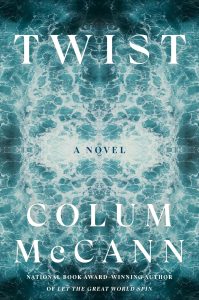
Twist
Colum McCann
Where we are. The Irish author crafts an emotional yet deeply technological tale set on the open seas, peeling back the layers of the hyperconnected reality we inhabit. McCann makes the invisible visible: the intricate work of repairing, laying and maintaining submarine cables, transforming something as abstract and intangible as connectivity into a profoundly human endeavour—oceans, seabeds, fibre optics, vessels, crews, hazards, relationships, breakdowns, emotions, questions…
McCann’s starting point is a journalist dispatched to report on these deep-sea operations alongside the mission’s lead engineer. As their personal journeys and shared interactions unfold, the novel captures both the raw majesty of nature and a sense of wonder at the sheer scale of the engineering required to make connectivity possible. At the same time, it reflects on the quiet disconnections among its characters, the wounds they carry and the delicate process of repairing what has drifted apart.
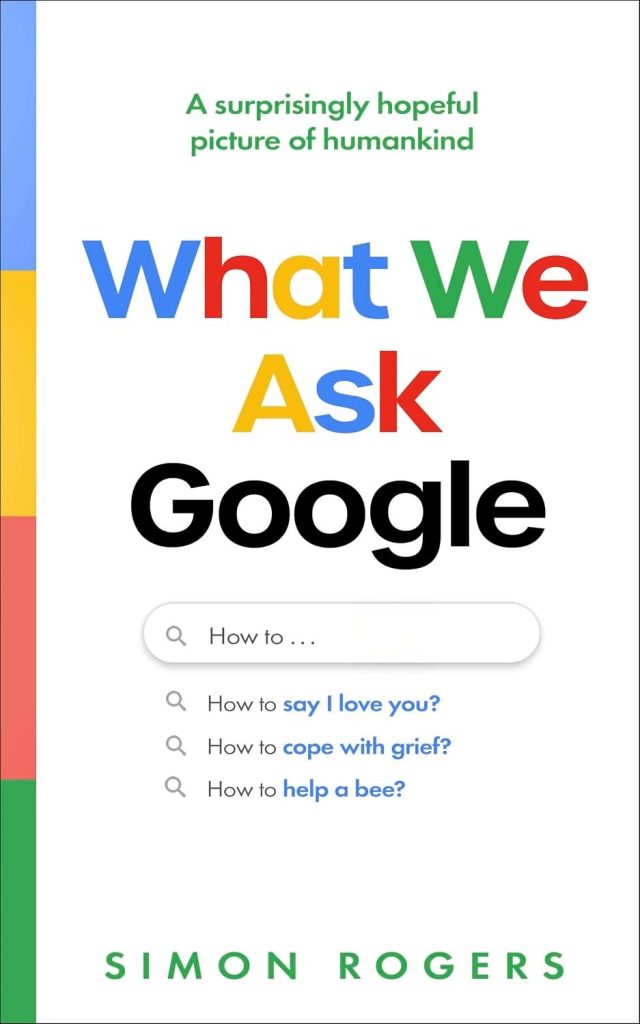
What We Ask Google: A surprisingly hopeful picture of humankind
Simon Rogers
What this world reveals about us. This book delivers an everyday, existential and surprisingly hopeful snapshot of humanity in 2026. The digital footprint we leave on Google, and the stories embedded within it, stem directly from the queries we feed into the engine. Among the twenty most frequent searches are intensely practical questions about tomorrow’s weather; mundane ones, such as how to tie a tie; joyful queries, like how many days remain until Christmas; and timeless, metaphysical puzzles: What is love? And, inevitably, how to kiss?
Drawing on these and countless others, Simon Rogers—Data Editor at The Guardian and former Data Editor at Google—constructs a rich radiography of our collective worries, curiosities, desires and needs, mirrored through the very questions people pose in private. Rogers elevates Google from a routine tech utility into an authentic mirror of the collective human psyche. What emerges is an uplifting takeaway: amidst rapid upheaval and pervasive uncertainty, humanity’s drive towards kindness, beauty and happiness remains steadfast. A charming, planet-positive example: in the UK, every June, one of the most consistently searched phrases is simply: “How to help bees”.
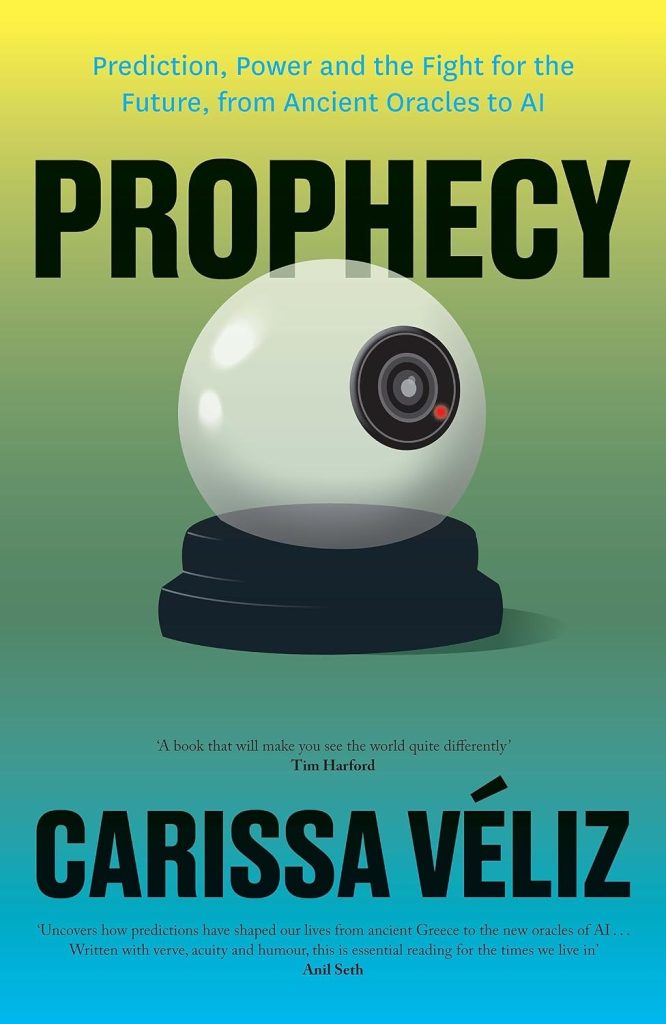
Prophecy: Prediction, Power, and the Fight for the Future, from Ancient Oracles to AI
Carissa Véliz
How we began to be anticipated. Following the evolution of human access to broad knowledge, this exploration turns to a primal question and a centuries-old ambition: Does the oracle truly exist? Have we finally built it? Humankind has long sought foresight—to foresee fate, play at being gods, preempt events and weave destiny like the Moirai of myth. To hold ultimate power. Algorithms present themselves as a shortcut to that ambition: promising to anticipate our identities and forecast behaviours that, by their very nature, carry a shadow side ripe for manipulation.
This is precisely where the author—Associate Professor at the Institute for Ethics in AI and Fellow at Hertford College, University of Oxford—directs her critical lens. She raises a fundamental query: Are we deploying predictions to better understand the future, or are we actively manufacturing a prescribed future around them? Is free will being quietly sidelined? It is an urgent invitation to scrutinise predictive tools, discern who genuinely benefits from their output and recognise when we must resist letting algorithms harden into our inevitable destiny.
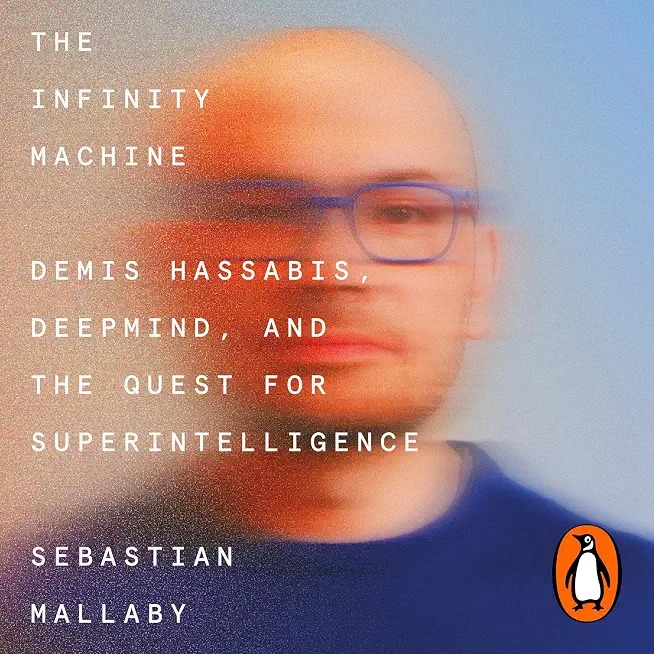
The Infinity Machine: Demis Hassabis, DeepMind, and the Quest for Superintelligence
Sebastian Mallaby
How we got here. This work resonates with sharp immediacy against today’s mounting concerns regarding the unchecked advancement of unregulated artificial intelligence. Mallaby moves beyond abstract philosophising to chronicling the flesh-and-bone reality of how AI is actually built: the scientists, corporate giants, academic laboratories and high-stakes technological arms race powering it forward.
At the heart of the narrative is Demis Hassabis—the prodigy, computer scientist, cognitive neuroscientist and driving force behind Google DeepMind, whose breakthrough work predicting complex protein structures with AI earned the Nobel Prize in Chemistry. Hassabis envisions systems capable of radically expanding—perhaps even superseding—human comprehension of the cosmos. While peers like Elon Musk have famously cast him in a more cautionary light, it is in figures of such brilliant, complex contrasts that the future trajectory of our species currently resides.
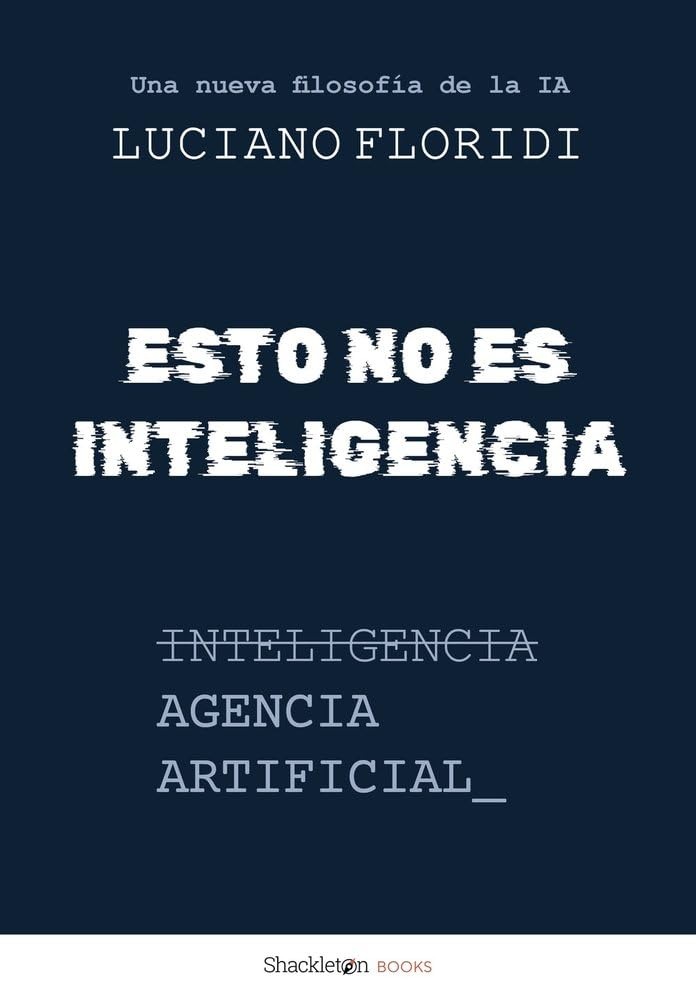
Artificial Agency: Explorations of a Post-AI Culture
Luciano Floridi
What remains in our hands. Two of the most pressing questions of our time, bridging the boundaries of science, biology and philosophy, are deceptively simple: What is intelligence? And is artificial intelligence truly intelligent? These themes are unpacked by one of today’s foremost thinkers in information ethics and digital philosophy. For the Italian philosopher, AI constitutes an “agency”: rather than seeing it as a conscious entity capable of thought, it is best understood as a machine engineered to act.
Mindful that the road ahead runs through automated systems, Floridi underscores the imperative to forge clear ethical frameworks for this technology before it irreversibly shapes our societies. What happens when we surround ourselves with agents capable of acting with formidable precision without possessing what we understand as intelligence? As he demonstrates, AI neither ponders, comprehends nor feels as a biological organism does; it is simply a suite of computational capacities engineered to execute actions with remarkable efficacy. Grasping this distinction is crucial if we are to design a world tailored to human dignity rather than subservient to automated logic, safeguarding our humanity in an increasingly automated future.
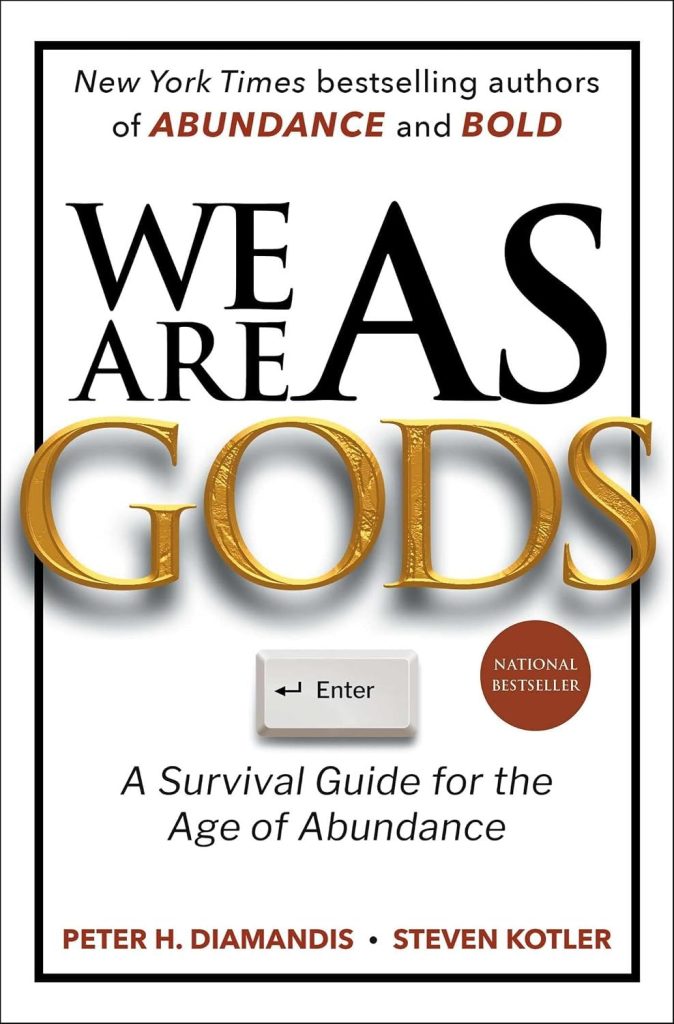
We Are As Gods: A Survival Guide for the Age of Abundance
Peter Diamandis and Steven Kotler
Are we prepared for the future? Scientific and technological breakthroughs advance relentlessly, bringing extraordinary benefits alongside profound existential risks. This brings us to a fundamental question: Do we possess the ethical maturity and human capacity to steer the immense technological power we are amassing? Society is undergoing a transformation that reaches far beyond industrial or technical domains, altering emotional and intimate spheres—from navigating overwhelming information floods and hyper-connectivity to mastering autonomous tools and redefining interpersonal relationships.
Peter Diamandis and Steven Kotler argue that a dangerous rift has opened between our cognitive capacity to process change and the exponential velocity of reality. They offer practical pathways to avoid being swept away by these new rules of engagement, charting “how each of us must adapt to keep pace. It is a manual for transforming anxiety into decisive action, and isolation into cross-border collaboration”.
These six books form vital pieces of a puzzle whose future is already unfolding before us. Ultimately, they challenge us to consider how we can cultivate and safeguard that which remains uniquely ours: our humanity, critical thought, emotional depth, capacity for creation, language, communication, art and conscious awareness.
Related Trends
Technology


Digital radio that prioritises plurality

DAS & Small Cells
More infrastructure, more data

